

Transforming GCCs Into AI-Native Innovation And Enterprise Capability Hubs
The next generation of Global Capability Centers will not be defined by scale alone. They will be defined by their ability to accelerate innovation, operationalize AI, unlock enterprise intelligence, and create measurable business value. SRKGameChangers helps organizations build the operating models, governance frameworks, and capabilities required to transform GCCs into strategic engines of growth.
Why AI-Native GCCs Matter Now
-
AI is reshaping operating models across industries
-
Data is becoming a strategic asset
-
Talent shortages continue to grow globally
-
Enterprises need faster innovation cycles
-
Traditional delivery-centric GCCs are reaching maturity
Leading organizations are increasingly repositioning GCCs as enterprise capability hubs rather than support functions.

The New Role Of GCCs
Today's leading GCCs are no longer limited to supporting business operations. They are becoming centers of excellence for:
-
Artificial Intelligence
-
Data & Analytics
-
Automation
-
Product Engineering
-
Digital Transformation
-
Enterprise Innovation
-
Product engineering
-
AI and automation
-
Cybersecurity
-
Digital platforms
-
Customer experience
-
Advanced analytics
-
Innovation programs
Organizations are increasingly using GCCs to build capabilities that directly influence business outcomes, customer experience, productivity, and future growth.
Our Innovation & AI Enablement Focus Areas
What Differentiates High-Performing AI GCCs?
-
The most successful AI-enabled GCCs share five characteristics:
-
Strong business ownership
-
Enterprise-wide data foundations
-
AI governance and risk controls
-
Product-oriented operating models
-
Outcome-based measurement frameworks
-
Executive sponsorship and accountability
Technology alone is rarely the differentiator.
Insights & Perspectives
Featured Topics:
-
AI-Native GCC Operating Models
-
Data & AI Centers of Excellence
-
GCC Innovation Playbooks
-
Agentic AI and Enterprise Transformation
-
AI Governance in Global Organizations
-
Future GCC Talent Models
The Strategic Shift
The question is no longer whether organizations should invest in AI.
The question is whether their operating model can scale AI across the enterprise.
Many organizations have AI pilots.
Few have AI operating models.
High-performing GCCs are increasingly becoming the execution layer that bridges strategy and enterprise-scale adoption.
AI Strategy
& Roadmapping
Develop a practical roadmap for AI adoption aligned with business priorities, operating models, governance requirements, and measurable outcomes.
AI-native GCC design that connects investment decisions to measurable business outcomes, governance requirements, and operating model transformation.
Data & Analytics Capability Development
Establish analytics, reporting, business intelligence, and data management capabilities that enable data-driven decision making across the enterprise.
Build enterprise data capabilities that enable better decision-making, predictive insights, and AI readiness across business functions focusing on Business Outcomes
AI
Operating Models
Design governance Structures, ownership models, and execution frameworks that support responsible and scalable AI adoption.
Innovation Centers of Excellence
Build innovation-led teams that focus on experimentation, emerging technologies, enterprise modernization, and continuous improvement.
Automation & Productivity Transformation
Identify opportunities to improve operational efficiency through automation, AI-enabled workflows, and process optimization initiatives.
Why AI-Native GCCs Matter
AI is fundamentally reshaping the GCC ecosystem.
As organizations invest in AI, data platforms, analytics, and automation, GCCs are becoming key contributors to enterprise-wide transformation initiatives. Success increasingly depends on building the right operating model, governance structures, talent capabilities, and innovation culture—not simply implementing technology.
Organizations that invest in these foundations are better positioned to:
-
Accelerate innovation
-
Improve productivity
-
Enable data-driven decisions
-
Strengthen customer experience
-
Scale transformation initiatives

-
CEOs accelerating enterprise transformation
-
CIOs and CTOs building AI-native operating models
-
GCC Leaders expanding beyond delivery mandates
-
Private Equity portfolio companies driving value creation
-
Enterprises establishing AI, Analytics, and Innovation Centers of Excellence
-
Organizations scaling AI beyond pilot programs
-
Organizations building AI capabilities within GCCs
-
Existing GCCs expanding into innovation and transformation mandates
-
Enterprises establishing analytics and data centers of excellence
-
Companies seeking to leverage AI and automation at scale
-
Leadership teams exploring future operating models and emerging technologies
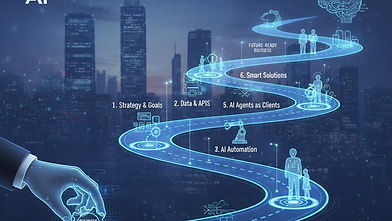
Frequently Asked Questions
Can a GCC become an AI Center of Excellence?
Yes. Many organizations are increasingly using GCCs to build AI, analytics, automation, and innovation capabilities that support enterprise-wide transformation initiatives.
Do we need a mature GCC before investing in AI?
Not necessarily. AI enablement can begin during setup, scaling, or transformation phases, provided governance and operating model considerations are addressed early.
How do we measure AI success in a GCC?
Success should be measured through business outcomes, productivity improvements, innovation impact, capability growth, and value creation rather than technology adoption alone.
Is Your GCC Ready For The AI-Native Enterprise?
Whether your organization is exploring AI, strengthening data capabilities, or transforming an existing GCC into an innovation hub, the right strategy can accelerate sustainable growth and enterprise impact.
The next phase of GCC evolution will be defined by intelligence, automation, data, and innovation. Organizations that establish the right operating model today will be better positioned to create sustainable competitive advantage tomorrow.